Side note: collaboration is itself a worthy goal in worship planning. It fights insularity, practices hospitality and humility, opens the door to creativity through exposure to new ideas. I say this because unless you explicitly value and work toward collaboration and cooperation, it's almost always easier to just do things yourself.
"Garden" is actually an Easter sequence, but it explores doubt as an expression of Good Friday. Like a cinematic story split into multiple films, the Good Friday service was "Part 1," and would focus on doubt. My overarching goal was that this service would be a safe space to express and vocalize doubt.
This was so counter-intuitive for me, as a practiced arguer and apologist. I have spent much time and study exploring and articulating reasons for faith. I had to live with my own discomfort, at times, of planning something that did not give answers and indeed invited questioning. And it took some digging, for sure, to find materials to use, since churches are nearly always trying to nurture and encourage belief, rather than undermine it. But I kept asking myself this question: would an atheist or skeptic feel welcome here? Would this engage the "nones" or the "dones?"
Other very helpful resources were Songs of Faith and Doubt, and Colby Martin's blog about his church's Liturgy of Doubt.
Here is the order of Service:
Opening Prayer
Welcome
Introduction:
Tonight, we are going to walk through the story of Jesus’s last hours before his death, and in doing this, explore the ways in which the God we thought we knew has died. Some of you are walking through this right now, and you are welcomed as you are and where you are. Tonight is not about answering questions, but holding them, hearing them, and honoring them. For some of you, tonight you will remember a time in your journey like this. Some of you are here to walk with us, to support us in our search, to be in solidarity.
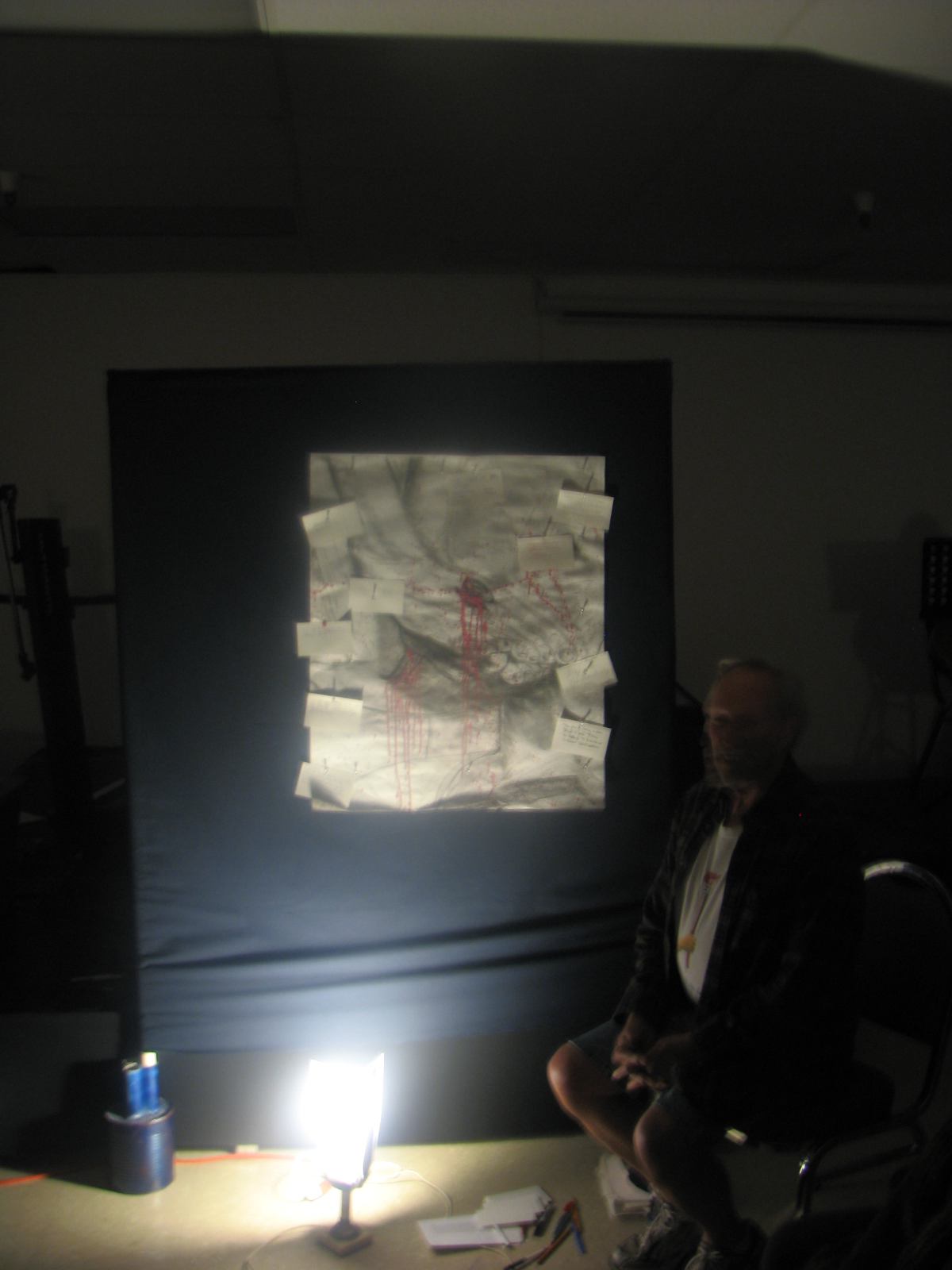
As you came in, you should have gotten a card that looks like this, with three prompts for reflection. At various points in the service tonight, we will invite you to respond and give you some time. And at the end, we’re going to have an open space to respond with them.
To begin, please join me in the opening prayer.
Opening Prayer:
A responsive reading of this prayer from Convergence Community
Readers Theatre- Gethsemane
Card Reflection
As you came in, you were given a card with three opportunities to respond. Now is the time for you to consider the first question: Who have you stood with as they questioned God? Who needs or needed you to “keep watch,” so to speak, in their time of spiritual darkness?
Music
Readers Theatre – Arrest and Interrogation
Card Reflection
Now again you have a chance to reflect and respond on your note card. In the story we just heard, Jesus gets asked many questions, but doesn’t answer many of them. So it is with us, as well. What questions have you asked, but not found an answer to?
Music
Readers Theatre – Sentencing and Crucifixion
Card Reflection
Many of the words of the song we’re going to sing now are taken from the Journals of Mother Teresa. As we sing, you’re invited to respond to the third question on your card.
Readers Theatre – Death and Betrayal
“Saturday” (turned into a dramatic reading with multiple readers)
Open Space
Now we come to an open space, where you can reflect and respond in a number of ways. We hold our questions and our doubts as sacred. They are yours and, because we are all together in this, they are ours.
You can come and attach your card to the cross. This can be a way of leaving the unanswered questions to God, for God to receive and wrestle with. They can be a form of protest, like when the reformer Martin Luther nailed his 95 theses of things he opposed in the Roman church, to the church door in Wittenburg. If you don’t want others to read them, you may fold it shut, and noboby will read them, ever.
But I also encourage you to consider leaving the questions visible. In our communities, questions are not frowned upon or seen as a deficiency of virtue or character or faith.
And more than that, we want to give voice to these questions. No doubt, Jesus’ disciples left the events of that Friday with a million unanswered questions. So before you attach your card to the cross, put it in a basket next to one of our readers. They will read your question or response aloud, for all of us to ponder, to ask with you, to hold and keep watch. You can take your card after they are done or leave it there.
The third way I invite you to respond is to go to one of the tables and fill a sachet, a little pouch, with burial spices, to carry with you.
At the end of this time, if you will find your seat again, we’ll close with a responsive reading of a Psalm.
Instrumental Music – Were you there?
Special Music – "On the Willows" from Godspell
Responsive Reading: Psalm 137
Liturgist: Psalm 137 is a Lament from when Isrealites had been exiled to ancient Babylon, away from their religious identity in the land they believed was promised to their patriarchs. Zion represents their political and religious hopes and identity, and to sing a song . Please sing with us the words of the refrain in italics.
By the rivers of Babylon,
we sat and wept
when we thought of Zion, our home, so far away.
How can we sing
Sing the Lord’s Song
In a foreign land?
On the branches of the willow trees,
we hung our harps and hid our hearts from the enemy.
How can we sing
Sing the Lord’s Song
In a foreign land?
And those that surrounded us
made demands that we clap our hands and sing—
Songs of joy from days gone by,
songs from Zion, our home.
How can we sing
Sing the Lord’s Song
In a foreign land?
So cruelly they taunted us—haunted our memories.
How could we sing a song about the Eternal
in a land so foreign, while still tormented, brokenhearted, homesick?
Please don’t make us sing this song.
How can we sing
Sing the Lord’s Song
In a foreign land?
O Jerusalem, even still, don’t escape my memory.
I treasure you and your songs, even as I hide my harp from the enemy.
And if I can’t remember,
may I never sing a song again—
may my hands never play well again—
For what use would it be if I don’t remember Jerusalem
as my source of joy?
How can we sing
Sing the Lord’s Song
In a foreign land?
Sending Forth


.png)